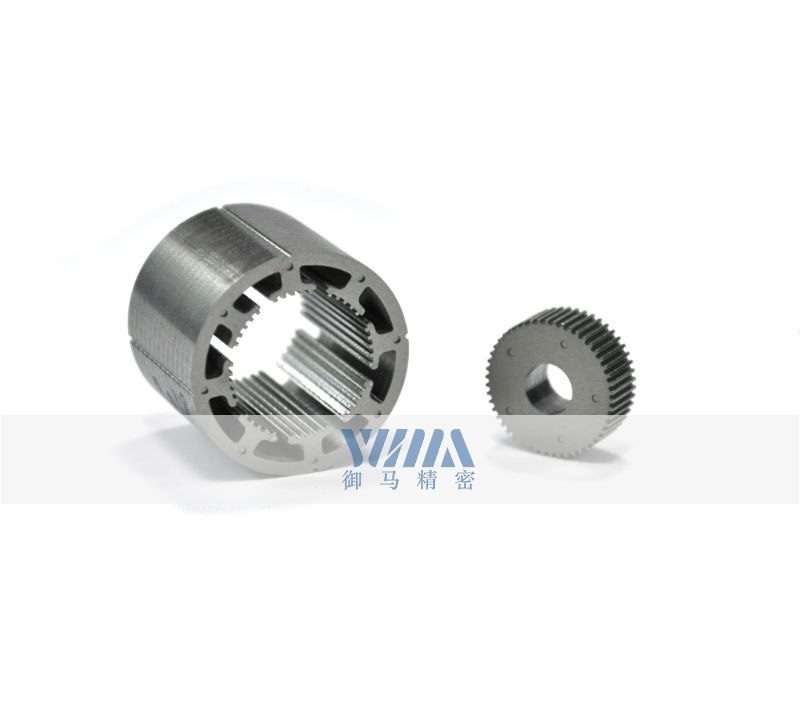
Stepper motors are essential for precision control in various applications, from 3D printing to CNC machines. This guide is designed for engineers and hobbyists seeking to optimize performance through microstepping. Microstepping allows for smoother operation and increased resolution, effectively addressing common challenges such as mechanical vibrations and position inaccuracies. By understanding the mechanics of stepper motor core microstepping, you can enhance your projects, whether in robotics or industrial automation, leading to a noticeable improvement in operational efficiency.
Basic Knowledge of Stepper Motor Core Microstepping
To effectively utilize stepper motors, it’s crucial to grasp some foundational terminology and principles. A stepper motor divides a full rotation into discrete steps, providing precise control of rotational position. Microstepping enhances this by subdividing each step into smaller increments, effectively improving resolution. The term 'microstep' refers to these fractional steps, often represented as an interpolation of the motor's full steps.
In a standard stepper motor without microstepping, each step is typically 1.8 degrees, allowing for a total of 200 steps per revolution. By employing microstepping, the effective resolution can increase significantly, allowing control over thousands of incremental positions. Understanding these concepts is vital for addressing common pain points like vibration and noise, translating into better performance metrics in your applications.
In-Depth Guide to Stepper Motor Core Microstepping
Implementing microstepping in your stepper motor setup involves several key steps and tools. Below are detailed instructions to guide you through optimizing your stepper motor performance.
1. Identify Your Application Requirements
Begin by analyzing the specific needs of your application. Determine required torque, speed, and resolution. For instance, a 3D printer may require high precision within a confined space, whereas an industrial conveyor system may prioritize speed over precision.
2. Choose the Right Stepper Motor
Select a stepper motor that suits your application’s specifications. For example, NEMA 17 motors are commonly preferred for their balance of performance and size. Verify factors such as holding torque, step angle, and current ratings, ensuring alignment with your project goals.
3. Select an Appropriate Driver
Using a suitable stepper motor driver is essential in achieving microstepping functionality. Drivers such as the A4988 or TMC2208 are popular choices that support various microstepping configurations (from full to 1/16 microstepping). Research the specific capabilities of each driver to find the best match for your motor’s specifications.
4. Configure Microstepping Settings
Once you have selected a driver, configure the microstepping settings based on your requirements. For example, if you require 1/8 microstepping, you need to set the appropriate jumpers on your driver board. This configuration directly influences operational smoothness and torque responsiveness.
5. Test and Calibrate
Run initial tests to assess motor performance at different settings. Measure step accuracy using sensors or encoders to validate that position errors fall within acceptable limits (ideally below 1%). Calibration may require iterative adjustments, so monitor results closely.
6. Implement Feedback Systems (Optional)
For applications requiring absolute precision, consider integrating feedback systems into your setup. Using encoders can inform your system of the motor's actual position, allowing for corrections in real-time, substantially improving reliability.
FAQ
What benefits does microstepping provide for stepper motors?
Microstepping offers enhanced resolution and smoother motion, resulting in better positional accuracy and reduced wear over time. The measured improvements in vibration reduction can lead to a performance increase up to 21% in some applications.
Are there disadvantages to using microstepping?
While microstepping improves smoothness, it can reduce the maximum torque available. Users may experience diminished torque at higher speeds compared to full-step operation. This phenomenon can be managed by calculating the optimal step settings based on specific application needs.
Which manufacturers produce high-quality stepper motors and drivers?
Manufacturers such as Yuma Precision provide high-performance stepper motors and driver solutions. Their products are designed to optimize motor efficiency and reliability across various applications. You can view their offerings here.
Advanced Skills and Extended Reading
For more complex applications, consider delving into advanced control algorithms such as Field-Oriented Control (FOC) for improved efficiency and responsiveness. Also, understanding thermal dynamics and electrical characteristics of stepper motors can enhance your design considerations. Online resources and technical papers are available for those looking to deepen their knowledge in these areas.
Conclusion
In conclusion, microstepping is an invaluable technique for optimizing stepper motor performance in various applications. By following the outlined steps and leveraging quality components like those from Yuma Precision, you can significantly improve your motor's operational capabilities. If you need assistance in selecting the right products or services, feel free to reach out to Yuma Precision for expert guidance tailored to your specific needs.